Harold Shipman Psychological Profile: The Killer Doctor | Craig Beck
May 01, 2026Harold Shipman Psychological Profile: The Doctor Killer
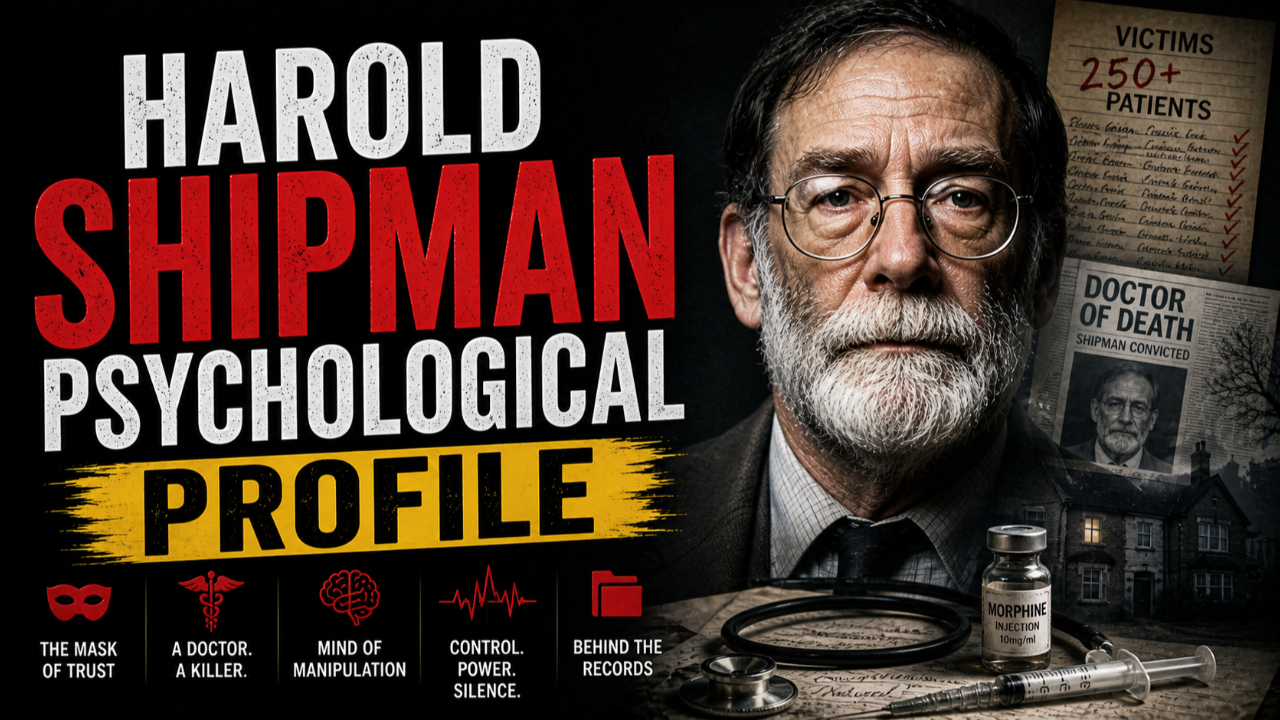
The Harold Shipman psychological profile reveals a man wired for control, never chaos. He was a respected English general practitioner who murdered an estimated 215 to 250 patients across more than two decades, most of them elderly women, most of them killed with diamorphine in their own front rooms. He needed no weapon, no struggle, no audience. His pathology blended covert narcissism, emotional detachment, and a chilling fixation on the doctor's authority over life and death. He weaponised trust. He turned routine into a hunting ground. He proved that the most dangerous predators wear stethoscopes far more often than masks.
Harold Shipman Psychological Profile: The Wiring Of A Killer Doctor
 Most killers crave noise. Shipman craved the opposite. He needed a quiet surgery, a tidy schedule, a closed front door, and the soft authority that arrives with a leather bag and a calm voice. That is what makes the Harold Shipman psychological profile so unsettling to study. He never stalked dark alleyways. He never craved the camera. He sat behind a polished desk in Hyde, Greater Manchester, and committed the largest series of murders ever attributed to a single hand in modern British history.
He looked organised. He looked intelligent. He looked socially credible. That is where most observers lose the plot. They expect monstrosity to arrive in costume. The reality runs uglier and far quieter. Some of the most lethal personalities are neat, polite, professionally validated, and trusted by everyone who matters. At the centre of his wiring sat a single appetite, domination disguised as care, expressed inside the only profession that gave him legal access to other people's bodies, secrets, and final breaths.
The Bedside Trauma That Built Doctor Death
Any honest reading of his adult behaviour must begin in his teenage years. His mother, Vera, died of lung cancer in 1963 when he was 17. He sat with her through the slow decline. He watched her receive injections of morphine from the family doctor. He watched relief arrive in a syringe and then watched it run out forever.
That sequence sounds ordinary enough on the page. Inside a developing mind already prone to emotional shutdown and grandiose self-image, it became something else entirely. Suffering, rescue, love, drug, doctor, and death stitched themselves into one tight loop. The figure delivering the morphine became, in his perception, the only person in the room with real power.
You cannot reduce a serial killer to a single childhood event. Plenty of teenagers lose mothers and grow into kind adults, decent partners, careful parents. Trauma rarely writes the whole script, yet it often supplies the typeface. In his case, the bedside scene did not invent the predator. It supplied the costume. It told a wounded boy that the doctor decides the ending, and that controlling the ending feels strangely like love.
Covert Narcissism In A Surgery Coat
When most people hear narcissism they picture a flashy showman desperate for applause. Shipman wore the quieter version, the kind clinicians often label covert. Superiority without performance. Entitlement without confession. He did not need a stage. He needed an examination room with the blinds half drawn.
He behaved as though his judgement sat above ordinary scrutiny. That is narcissism stripped to the bone. Vanity about competence rather than appearance. Godlike certainty about his own decisions. He did not crave applause. He demanded compliance. Patients deferred. Receptionists deferred. Coroners deferred. The British medical hierarchy deferred. A respectable narcissist functions beautifully inside a system that already mistakes confidence for capability.
This is one reason his murders went undetected for so long. He never peacocked. He never courted reporters. He operated out of professional arrogance, which society routinely confuses with quiet competence. The same trait that makes a difficult colleague look diligent can, at its extreme end, become full moral exemption. Rules belong to ordinary men. He, in his own private opera, was never ordinary.
Why Elderly Female Patients Fitted His Pattern
His victim selection was anything but accidental. Predators choose for reasons, even when those reasons sit beneath conscious thought. The vast majority of his confirmed victims were women over 65, most of them living alone, most of them on his own patient list. The pattern is so consistent across his timeline that any serious case study of his career reads like a quiet, terrible algorithm running on repeat.
The practical advantages are obvious. Death in old age raises fewer questions. Grief absorbs scrutiny. Coroners sign certificates. Families weep and move on. He understood this with brutal clarity. An elderly woman dying suddenly in her armchair sounds tragic but plausible. A healthy young man dying mid-shift triggers an inquiry within the hour.
Yet the practical layer rarely walks alone. Underneath sat something colder, something psychological. Many of his victims carried a faint maternal echo. Female, vulnerable, alone with him in private spaces, dependent on his judgement, soothed by his voice. Whether or not he consciously connected that pattern back to Vera Shipman, the symbolic geometry is impossible to ignore. He cast himself again and again as the only authority at the bedside, the figure who decides whether the next breath happens or not.
Power Not Bloodlust Was The Real Reward
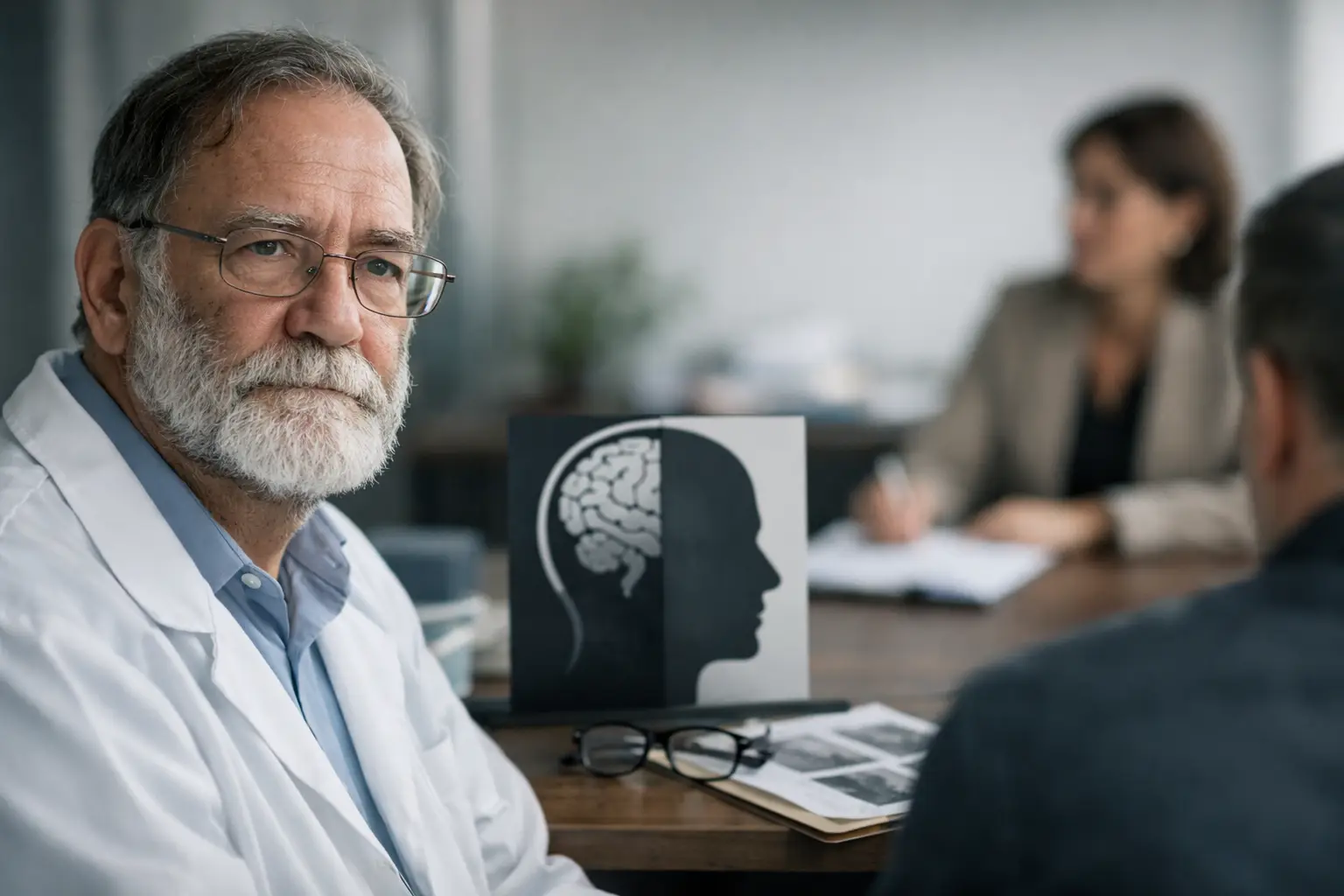
Plenty of serial killers chase sexual sadism or the wild adrenaline of physical violence. Shipman fits neither category. The pleasure he hunted was control itself, served quietly, in armchairs, with the curtains pulled.
He decided exactly when each patient died. He often controlled the story afterwards. He doctored medical records to backdate symptoms that would explain a sudden death. He altered notes. He forged the will of his final victim, Kathleen Grundy, leaving her estate to himself, which is the breathtakingly arrogant move that finally collapsed his career in 1998. That detail tells you the killings were never only about the moment of death itself. They were about ownership of reality before, during, and long after the act.
There is something almost theatrical about the silence he constructed. No drama. No frenzy. No screaming. Just a soft injection, a polite phone call, a falsified record, and another grieving family thanking him for his attentive care. For a personality wired for grandiosity without applause, that quiet authorship behaved like its own narcotic. The compulsive need to control even the corpse afterwards rhymes with other British predators, including the patterns explored in Craig's Dennis Nilsen profile, though the methods could not look more different.
The Compartmentalised Mind That Hid In Plain Sight
He maintained the appearance of a devoted general practitioner, a husband to Primrose, and a father of four, while quietly murdering on a near industrial scale. That requires compartmentalisation at a level most people find genuinely difficult to imagine, let alone diagnose.
Readers always reach for a magical explanation. Surely he must have cracked at some point. Surely there were obvious cracks in his behaviour. Often there were not. Many high-functioning predators construct mental walls so thick that one part of life never bleeds into the next. It is not sanity. It is psychological partitioning, where empathy gets switched off when it threatens the routine and switched back on for the school run.
He could move from a fatal house call to lunch with his wife because his victims were never registered as full human beings inside his moral universe. They were patients, problems, or props. The British public spent years trusting him because his mask was tailored, never borrowed. Communities defended him. Medical regulators dismissed early concerns. The system kept extending the benefit of the doubt because the costume looked perfect from the outside. The Dame Janet Smith inquiry into his crimes, archived by The National Archives, eventually documented how many warning signs the system swallowed without flinching.
Was Harold Shipman A Textbook Psychopath
Almost certainly, or at least he displayed a heavy cluster of psychopathic traits. Emotional coldness, manipulation, shallow remorse, deceit, and repeated violation of moral boundaries all sit inside his behavioural record with grim consistency. Peer-reviewed research published by the National Institutes of Health on serial offender life patterns lines up with much of what investigators recovered from his practice and his computer.
But labels become lazy when they end the inquiry rather than begin it. Calling him a psychopath is useful only if you understand what it means in practice. It means he treated trust as a tool, relationships as instruments, and human vulnerability as a doorway. It means his conscience either failed to fire, or was overridden so often that the firing became irrelevant.
Puzzles remain that the diagnosis alone cannot solve. Psychopathy explains the emotional detachment but does not fully account for the symbolic loop of doctor, mother, syringe, authority, and bedside ending. That loop deserves its own scrutiny, and any honest life history reading of him must hold both lenses at once. Diagnosis without context is intellectual taxidermy. The label sits on the wall, pretty and lifeless, while the real animal escapes through the back garden.
What Shipman Reveals About Trust And Authority
The grim lesson is bigger than one rogue doctor. Institutions confuse credentials with character at scale, every single day. He exploited a basic social reflex. If a person sounds confident and wears authority well, the people around them lower their guard automatically. He understood that reflex with surgical precision. So, he used it the way a surgeon uses a blade.
This is persuasion in its darkest possible form. No hypnotic eye contact. No dramatic flourish. Just status, certainty, and the human appetite for obeying the figure who appears to know what they are doing. He did more than murder individuals one by one. He weaponised institutional trust itself, then leaned back and let the system protect him for years.
That is why his case still bites. He demonstrates how easily evil can pass for competence when wrapped inside a familiar uniform. He reveals how often control disguises itself as concern, right up to the moment the door clicks shut behind it. If you read serious true crime profiles for more than gore, his story stands as one of the clearest case studies in hidden domination ever recorded in the United Kingdom. He was driven by certainty, entitlement, and the private satisfaction of deciding who lived another year and who did not. Once you spot that wiring, the white coat stops looking reassuring. It starts looking like a costume.
What readers are saying. "I have read every Shipman case study published in English, and Craig Beck still surprised me. He treats Shipman as a psychological problem rather than a tabloid horror story, and the result is the most useful book on the case I have come across. Buy it, read it slowly, and never trust a quiet doctor blindly again." Nathaniel Pierce, Sacramento, California.
"Beck does what most true crime authors are too lazy to attempt. He explains the man, then the crimes. The chapters on covert narcissism and compartmentalisation alone were worth the price of admission. I finished it in two evenings and immediately recommended it to my book club." Diane Whitaker, Charlotte, North Carolina.
"As a retired hospice nurse, I have spent decades around patients in their final weeks. This book made me re-examine more interactions than I would like to admit. Beck writes with bite and humour while never disrespecting the victims. Five stars and a quietly chilling read." Susan Petrocelli, Boston, Massachusetts.
 About the author. Craig Beck is widely regarded as the world's leading authority on persuasion and human behaviour. A certified NLP Master Practitioner, former UK broadcaster, and author of more than one hundred bestselling titles, he has spent over two decades dismantling the question of why human beings say yes when they should be saying no. More than a million readers across the globe have leaned on his work to understand the hidden mechanics of influence, decision making, and self-deception. He does not lecture from theory. He shows you how the wiring of human behaviour really fires once the polite social mask drops. His ongoing Decoded series applies that same surgical lens to the darkest minds in modern history.
Last updated: 1 May 2026.
Frequently Asked Questions About The Harold Shipman Psychological Profile
How many people did Harold Shipman kill?
The Dame Janet Smith inquiry concluded he was responsible for at least 215 confirmed murders, with strong evidence the true figure sits closer to 250. Most victims were elderly female patients on his own list, killed at home with lethal doses of diamorphine. He was convicted in January 2000 of 15 murders, though the inquiry later established the wider count from his medical records. He never confessed before taking his own life in Wakefield Prison in 2004.
What psychological disorder did Harold Shipman have?
He was never formally diagnosed before his death, yet his behaviour displays a strong cluster of psychopathic traits, covert narcissism, and severe compartmentalisation. Forensic psychologists who studied his records describe a personality wired for cold control rather than impulsive violence. The popular reach for a single tidy label misses the point. His pathology blended several traits at once, which is precisely the reason he passed as competent for so long inside the British medical system.
Why is Harold Shipman called Doctor Death?
The British press dubbed him Doctor Death once the scale of his murders became clear in 1998 and 1999. The label stuck because the contradiction is unforgettable. A man trained to preserve life used that training to end it on a near industrial scale, undetected, behind the smile of a trusted family doctor. The nickname captures both the crimes and the cultural shock of realising the safest face on the high street had been the most dangerous one.