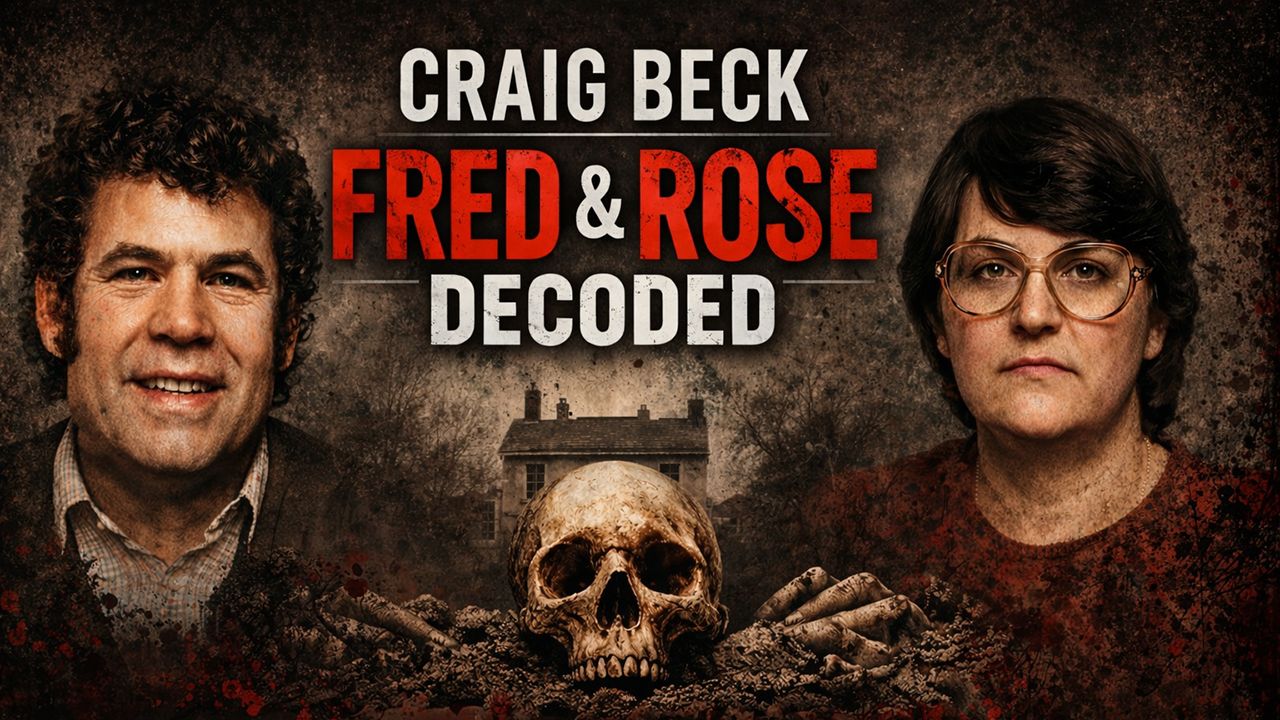
Fred & Rose Decoded: Inside the Minds of Britain's Most Depraved Killing Couple
Apr 27, 2026Fred & Rose West Decoded: Inside the Minds of Britain's Most Depraved Killing Couple
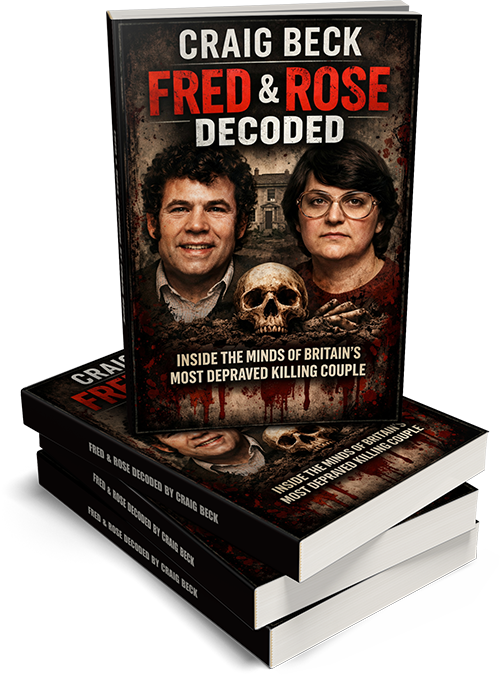 Fred and Rose West were a married British couple who tortured, raped and murdered at least twelve young women and girls between 1967 and 1987, including their own daughter Heather and Fred's stepdaughter Charmaine. Operating from 25 Cromwell Street in Gloucester, they hid in plain sight for nearly three decades while bodies piled up beneath the cellar floor and the patio. Fred handled the killing. Rose handled the recruitment. Together they formed one of the most disturbing folie à deux partnerships in modern criminal history, and one of the most under analysed.
This is not the story of one monster. It is the story of two people who found each other and made each other worse. Fred alone might have been a violent petty criminal with nasty secrets and a few buried lovers. Rose alone might have been a sadistic mother and a controlling sex worker. Stitched together they became something neither could have managed solo. That is the bit the documentaries skim over, and that is the bit we are going to pull apart in plain English.
Want the full psychological dismantling? Get Fred & Rose Decoded on Amazon.
Who Were Fred and Rose West
Frederick Walter Stephen West was born in 1941 in the Herefordshire village of Much Marcle, the eldest surviving son of a farm labourer named Walter West and a domineering mother named Daisy. From the start the family was steeped in casual cruelty and persistent rumours of incest. Fred told one of his lovers, years later, that his father had taught him sex was a privilege of family life and that his mother had taken his virginity at twelve. Whether every detail is true or invented for shock value, the wider point holds. He grew up in a house where the line between affection and abuse had never been drawn.
Rosemary Pauline Letts arrived later, in 1953, born in Devon to a paranoid schizophrenic father named Bill Letts and a chronically depressed mother named Daisy who endured electroconvulsive therapy while pregnant with her. Rose was a slow, awkward child who hummed to herself, rocked compulsively at the dinner table and was nicknamed Dozy Rosie at school. By 15 she had already been sexually abused at home, almost certainly by both her father and an older brother. Then she met Fred, a 27 year old labourer with a missing front tooth and a Transit van full of secrets. Within months she was pregnant. Within a few years she was helping him kill.
The Childhoods That Built Two Predators
Both Wests carried childhoods that read like a textbook on how to grow a sadist. Fred suffered a serious motorcycle accident at 17 that fractured his skull and left him with a metal plate in his head. His behaviour shifted afterwards. He became more impulsive, more sexually preoccupied, more prone to sudden flashes of violent rage. A second head injury followed when he fell from a fire escape at 19, knocking him unconscious for 24 hours. The frontal lobe is the part of the brain that polices impulse and empathy. Fred's was, almost literally, dented.
Rose's biography was bleaker in its own quiet way. Her father terrorised the household with rigid cruelty, beating the dog, his wife and the children with the same brisk efficiency he applied to fixing radios. Her mother's electroshock treatment in pregnancy may well have affected Rose's neurological development before she even drew breath. Add a likely IQ in the lower normal range, plus probable childhood sexual abuse from inside her own home, and you have a young woman who arrived at adolescence with no functioning template for healthy intimacy. She was hungry for any adult who paid her attention without hitting her.
That is the soil Fred West landed in. He was not just an opportunist who happened to find an underage girlfriend at a bus stop in Cheltenham. He was a hunter who recognised her vulnerability the moment he saw her. The same dynamic shows up in nearly every predatory pairing on record, including the closest British parallel to the Wests, the appalling partnership of Ian Brady and Myra Hindley. Brady spotted something usable in Hindley. Fred spotted the same thing in Rose. Both of them were correct, and both of them set about feeding it.
The Dark Triad in Plain Sight
 Walk past Fred West on the street and you would have clocked a scruffy West Country labourer with a chipped grin, gappy teeth and grease under his fingernails. You would not have clocked a man who scored, by any reasonable forensic measurement, dangerously high on every leg of the Dark Triad. Psychopathy. Narcissism. Machiavellianism. Three traits that on their own can make a person difficult. Stacked on top of one another in a single skull, they remove the brakes from the human capacity for harm.
Psychopathy gave Fred his absent conscience. He talked about killing women the way another man talks about fixing a fence. There was no grief, no remorse, no flicker of empathy in the police interview tapes. When detectives gently asked him about the dismemberment of his own daughter, he chuckled. That chuckle is worth pausing on. It is the sound of an emotional system so damaged it cannot register what should be unbearable. The same flatness shows up in the prison footage of Ted Bundy, who could discuss the torture of his victims with the brisk detachment of a man reviewing his holiday plans.
Narcissism gave Fred his belief that the world owed him sex on his terms. He saw women as utility objects. The grandiosity was small in scale but absolute in conviction. He believed himself a clever man, a charmer, a builder, a father, a provider. The fact that he was none of those things in any meaningful sense never penetrated, because narcissism is a one way mirror. Machiavellianism gave him his patience. He buried bodies neatly, dug out the cellar by hand, patched concrete, replaced floor tiles, told neighbours he was extending the kitchen. He played the long game with police, social services and his own children for years.
Rose carried the same triad in a different costume. Her psychopathy was the colder of the two. Her narcissism flowered as a queen of the house dominance over tenants and family alike. Her Machiavellianism made her the front of house, the welcoming face who drew victims through the door of 25 Cromwell Street while Fred lurked behind it with his tools.
How Fred and Rose Hunted Their Victims
The pattern was simple and it almost never failed. Fred would drive his white Ford Transit slowly along the streets of Gloucester and Cheltenham at night, looking for young women alone. Hitchhikers were ideal. So were teenage runaways, girls in care, lodgers desperate for cheap rent. Rose advertised rooms at Cromwell Street and interviewed prospective tenants herself, sizing up which ones were isolated enough that nobody would come looking when they vanished.
Lucy Partington, a 21 year old Exeter University student, was waiting for a bus home in Cheltenham on the 27th of December 1973. Fred picked her up. She was held for around a week in the cellar before being murdered, dismembered and buried beneath the floor. Carol Ann Cooper, just 15, vanished after a night at a youth club in Worcester. Therese Siegenthaler, a Swiss student hitchhiking to Ireland. Shirley Hubbard, only 15, last seen at a bus stop. The bodies kept piling up in the same patch of Gloucestershire soil while the country went about its business and the local press chalked the missing girls up to runaway statistics.
Inside the house the abuse was relentless and choreographed. Victims were stripped, bound, gagged with parcel tape wrapped tightly around the head, sometimes leaving only a breathing tube through the mouth. They were raped, tortured, photographed and filmed for the couple's private collection. Fred liked to remove fingertips, toes and kneecaps after death, possibly to hinder identification, possibly because by then he had crossed a line where mutilation itself had become part of the ritual. Those bones were never recovered with the bodies. Where they went is one of the case's enduring mysteries. He kept them. He liked having them.
Want the full psychological dismantling? Get Fred & Rose Decoded on Amazon.
Inside 25 Cromwell Street
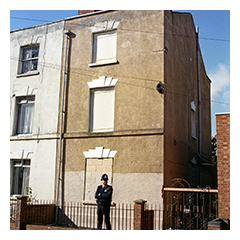
 To understand the Wests, you must understand that house. Three storeys of red brick on a quiet residential road in Gloucester, with a pebble dashed extension Fred built himself out of stolen materials and fly tipped rubble. Behind the front door it functioned as a bed and breakfast, a brothel, a torture chamber and a family home all at once. Children played in the upstairs rooms while women died in the cellar. Rose took clients in a black painted room she had decorated for her sex work, complete with a viewing hole drilled into the wall so Fred could watch. Tenants came and went. Some left. Some did not.
Their own children grew up inside this nightmare. Anne Marie West, Fred's daughter from his first marriage, was raped by her father from the age of eight, with Rose holding her down. Heather, born to Fred and Rose in 1970, was the strong willed one, the daughter who fought back and told friends at school she was being abused. She vanished in 1987, aged 16, and her parents told relatives she had run off to work at a holiday camp in Devon. The truth was that Fred had strangled her in the bathroom and dismembered her body on the patio. The family joke that Heather was buried under the patio was, in the end, exactly true. The other West children grew up hearing it laughed about over Sunday dinner.
The Collapse of the House of Horrors
In May 1992 the police finally caught a thread they could pull. A child rape investigation involving one of the West children led to a search of the property and the seizure of Fred's homemade pornography. The case collapsed when key witnesses refused to testify, but suspicion festered. By February 1994, Detective Constable Hazel Savage, who had known Rose's name for two decades, ordered a fresh dig of the back garden. They found Heather's bones first. Then they found another set, and another, and another.
Fred confessed in stages, almost performatively, alternating between admission and retraction. He named victims, then changed his mind. He drew maps, then drew different maps. He seemed almost to enjoy the police attention, the way an attention starved child enjoys a parent finally turning to look at him. On the 1st of January 1995 he hanged himself in his cell at HMP Birmingham, using a noose fashioned from prison issue bedsheets. He left Rose to face trial alone, which was, in its own twisted way, his final act of cruelty toward her. The BBC's contemporary coverage caught the public mood at the time. Relief that he was dead. Fury that he had escaped sentencing.
Rose did face trial, and she lied through every minute of it. She maintained her innocence with the brittle outrage of someone who had spent decades convincing herself the lie was true. The jury did not believe her. On the 22nd of November 1995 she was convicted of ten murders and given a whole life tariff. According to later reporting in The Guardian, she has not confessed, has never expressed remorse, and has had no contact with her surviving children for many years. She eats alone, walks alone, and tells anyone who will listen that she is the real victim of the case.
What the Wests Teach Us About Spotting Predators
If you take one practical lesson from the Cromwell Street horror, take this. Predators rarely operate alone when they can find a partner. The folie à deux dynamic between Fred and Rose was the engine that allowed both of them to escalate beyond what either would have managed solo. He needed her cover. She needed his permission. Together they granted each other the moral licence to do things that the rest of us cannot rehearse, even in our worst nightmares.
Look for the pattern, not the headline. The man who isolates a vulnerable young woman early. The partner who normalises his cruelty rather than challenging it. The household that runs on rigid dominance instead of affection. The children who flinch when adults raise their voices. The rooms in the house that some family members are not allowed to enter. None of these on their own prove anything. Together they form a constellation that ought to make any thinking person uneasy. Britain's recent history is littered with monsters who hid behind the same kind of camouflage, including Jimmy Savile, who used charity work and family friendly television to mask decades of predation while everybody who mattered chose to look the other way.
Fred had been arrested before. For theft. For fathering a child on a 13 year old girl. He was a person of interest in the disappearance of his first wife Catherine Costello, known as Rena, and his pregnant lover Anna McFall, both of whom he had murdered years before he met Rose. Rose had been suspected by neighbours, social workers, even her own father. The information was there. The institutions did not connect it. Twelve known women died, and the true number is almost certainly higher.
The Question Nobody Asks About Rose West
Most retrospectives of the West case treat Rose as an extension of Fred. The dim accomplice. The malleable wife. The shadow at his elbow. That framing is comfortable, and it is wrong. Worse, it is dangerous, because it lets us file Rose away as an aberration produced by one bad husband, when the truth is darker. Fred did not invent her. He activated her.
Rose was already sadistic before she met him. She abused her younger siblings before she ever set foot in Cromwell Street. She showed sexual interest in children before she had any of her own. The forensic psychiatry on her case suggests primary psychopathy rather than acquired complicity. She did not become a killer because Fred made her. She became a killer because she found in Fred the rare partner who matched her own existing appetite. He gave her the means and the cover. The hunger was already there.
That is the uncomfortable truth the British public has never fully sat with. We prefer our female killers to be victims first and monsters second, because the alternative forces us to admit a woman can be every bit as predatory as a man. Rose proved otherwise. She is, in many ways, the more chilling half of the partnership, because while Fred indulged the urges in moments of frenzy, Rose enjoyed the suffering of others as a steady, daily pleasure. He killed in bursts. She tormented in instalments.
The Last Word on Cromwell Street
 There is no clean ending to this story. Fred took whatever truths remained to his cell ceiling. Rose has buried hers beneath thirty years of denial. Somewhere in Gloucestershire there are families who never got their daughters back, never recovered the bones, never even knew their child crossed the path of the white Transit van. What lingers is the ordinariness of the address. Cromwell Street was demolished in 1996, the bricks crushed to powder so they could not become souvenirs. The plot is now a public footpath, sterilised, anonymous. Every time you walk past a house that looks like nothing, on a street that registers as nothing, remember this. The most monstrous people in British criminal history did not live in a castle on a hill. They lived in a terraced house with a paint flecked door, and they killed inside it for nearly three decades while the world walked past, polite, busy and looking the other way.
Want the full psychological dismantling? Get Fred & Rose Decoded on Amazon.

About the Author
 Craig Beck is the world's foremost expert on persuasion and human behaviour. A certified NLP Master Practitioner, former UK broadcaster and bestselling author of more than one hundred books, he has spent two decades reverse engineering why people say yes, why people obey, and why some people kill.
More than a million readers across the globe have used his work to understand the hidden mechanics of influence, decision making and motivation. He doesn't teach theory.
He shows you how the wiring of humanity works, the bright bits and the broken bits alike.
Frequently Asked Questions
How many people did Fred and Rose West actually kill?
The official conviction count stands at twelve victims, but the real number is almost certainly higher. Fred admitted to additional killings before retracting, and several missing women from 1970s Gloucestershire fit the couple's victim profile. Police believe undiscovered remains may exist at locations Fred used as a labourer. The twelve identified victims include their daughter Heather, Fred's stepdaughter Charmaine, his first wife Rena Costello, his lover Anna McFall, and a string of young women aged between 15 and 21.
Why did Fred West commit suicide before his trial?
Fred West hanged himself on the 1st of January 1995 in his cell at HMP Birmingham, using bedsheets and a chair leg. Several forces drove him. He could not face the public spectacle of trial, where his crimes would be detailed in open court. He had begun retracting earlier confessions and may have realised the case against him was unbeatable. There is also a strong argument that suicide was his final act of control, a way of denying the courts and the victims' families the satisfaction of formal sentencing.
Is Rose West still alive and where is she now?
Rose West is still alive and serving a whole life sentence at HMP New Hall in West Yorkshire. She was originally given ten life sentences in 1995, and the trial judge recommended she should never be released. She has consistently denied any involvement in the murders for which she was convicted, including the killing of her own teenage daughter Heather. Reports describe her as solitary and unrepentant, with no contact from any of her surviving children for many years.